
Becoming Intentional Marvellers
Living Intentional Teaching Beyond the Plan - A collaboration between Michelle Flower and Lynn Rupe
When we predetermine where tamariki are meant to arrive, we quietly limit where they might go. Where curriculum design (aka planning) is grounded in Te Whāriki, intentional teaching is not about steering tamariki toward fixed destinations. It is about orienting ourselves toward valued learning while remaining open to the unexpected pathways tamariki create.
Kaiako are sustained through professional learning that grows them as thinkers, researchers, innovators, and constructors of knowledge alongside tamariki. Ongoing inquiry is not an optional extra in our work - it is the heartbeat of it. Unravelling, recognising and responding to the learning in play is the inquiry of thoughtful kaiako.
When we strive to truly understand what tamariki are thinking, we attune ourselves to the intricate dance of their learning: the pauses, the revisiting, the testing of theories, the moments of frustration and sense of accomplishment.
What might it look like to sidestep the Individual Development Plans, listing the intentional teaching strategies you plan to use or any other way that aligns practice to paper rather than tamariki and instead embrace curiosity, persistence, and inquiry and ultimately responsiveness to the uniqueness of each tamaiti?

Pedagogy as Intentional Practice
The role of the kaiako is to facilitate learning and development through thoughtful and intentional pedagogy.
Intentional practice means:
Recognising and responding to tamariki interests, strengths, and working theories
Making deliberate decisions about when to guide, when to support, and when to step back
Creating meaningful learning opportunities rather than leaving learning to chance
Intentionality does not mean control. It does not mean directing every outcome. Instead, it asks us to be attuned, responsive, and deeply reflective in the choices we make throughout the day. Yet in many early childhood settings, intentional teaching is increasingly equated with what can be shown in advance, written goals, individual plans, prescribed strategies. Accountability can begin to shape pedagogy in subtle ways. When intentionality becomes something that must be pre-planned in order to count, we risk narrowing a rich and relational practice into a paper exercise.
Intentional teaching does not live only in plans.
It lives in professional judgement.
It lives in:
The pause before responding.
The decision to protect uninterrupted play.
The question that deepens a working theory.
The restraint not to redirect.
The subtle adjustment of materials.
The revisiting of yesterday’s thinking.
Plans may show preparedness. Moments reveal pedagogy. Margaret Carr has noted that kaiako make around 900 planning and responsive decisions in a day, decisions that reflect professional judgement in the moment, not just what is written in a plan.
The Environment as Laboratory
What might intentional practice look like in the day of an early childhood kaiako?
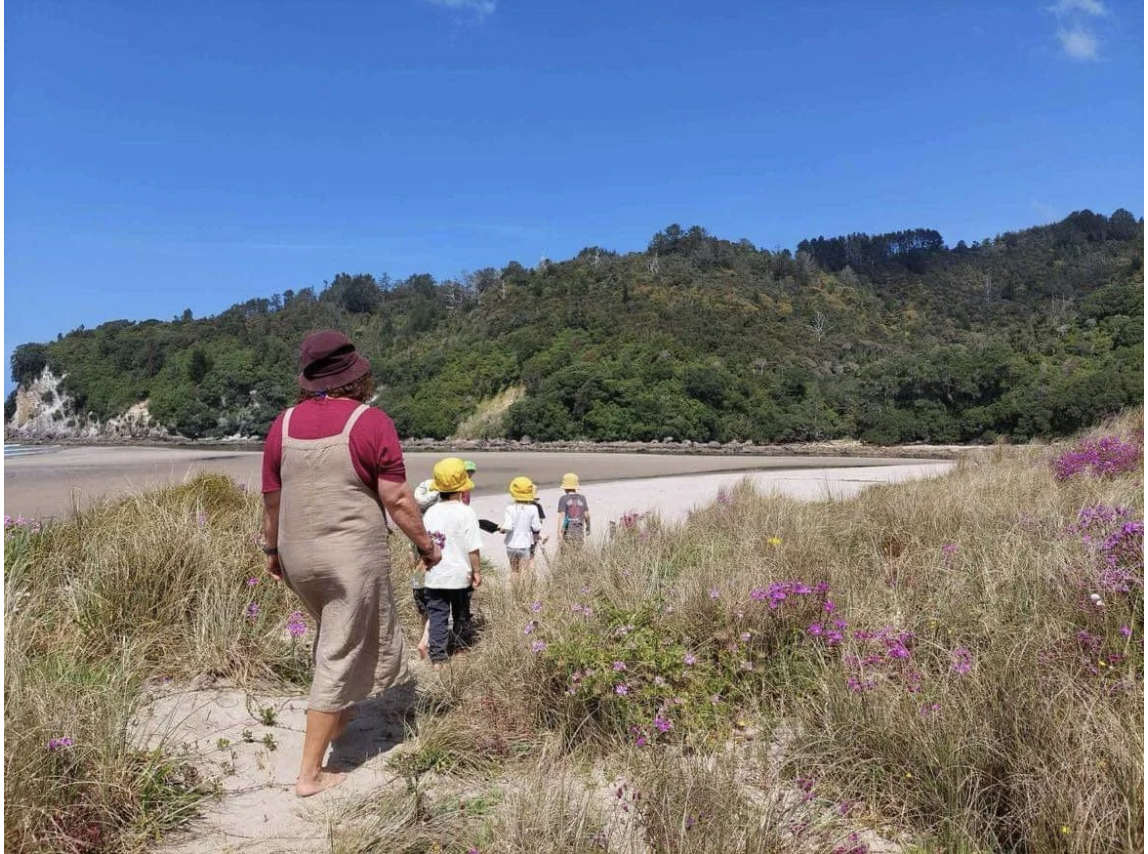
It begins with valuing a rich, laboratory-like environment, a space that invites exploration, experimentation, and discovery. An environment that whispers possibilities rather than shouts instructions. A place where materials are open-ended and time is generous.
It also requires us to slow down.
To resist redirecting attention toward our own purposes.
To notice when routine interrupts deep engagement.
How often do we call tamariki away from rich thinking for the sake of transitions? How frequently do we fragment their concentration because “it’s time”?
Research on the nature of play supports the importance of uninterrupted time. Several experts in early learning and child development - including Peter Gray, Stuart Brown, and Heather Shumaker, suggest that it takes tamariki around 45 minutes to enter the flow of play. They then need at least another 45 minutes to move into deep, sustained play. When we fragment their time, we fragment their thinking.
If we value complexity, we must protect time, that is intentional teaching.
Interrupting Our Kaiako Scripts
Carol Ann Wien uses the term “teacher scripts” to describe the internalised patterns, assumptions, and ways of responding that guide how educators interact with learners. For kaiako, these scripts might sound like:
“We need to move on now.”
“Let me show you how.”
“That’s not the right way.”
These scripts can help us manage a day, but they can also limit possibility. Intentional practice asks us to pause and notice:
Whose agenda are we serving?
Are we preserving routine - or protecting thinking? This is disciplined work. It requires humility. It requires courage.
Curriculum as Relationship
If curriculum design is “who walks through the door each day”,then we must embrace uncertainty. Curriculum design is not a predetermined plan waiting to be delivered. It is co-constructed, shared knowledge emerging in relationship. No plan can anticipate the idea a child carries in at 8:47am.
Carlina Rinaldi reminds us: “The potential of children is stunted if the end point of their learning is formulated in advance.” When the destination is predetermined, curiosity narrows. Possibility contracts. The child’s sovereignty as thinker is compromised. Imagine the many moments that have left you thinking - I never would have thought of that! Moments when a tamaiti shares an idea, a question or an experience that you listen to - deeply, with curiosity. Have you ever thought, ‘I could not have planned for that moment in time’. But there it was presented to you and you listened, and you responded and you thought about where this amazing insight into the world of the tamaiti might go - that’s intentional teaching. That is where magic happens.
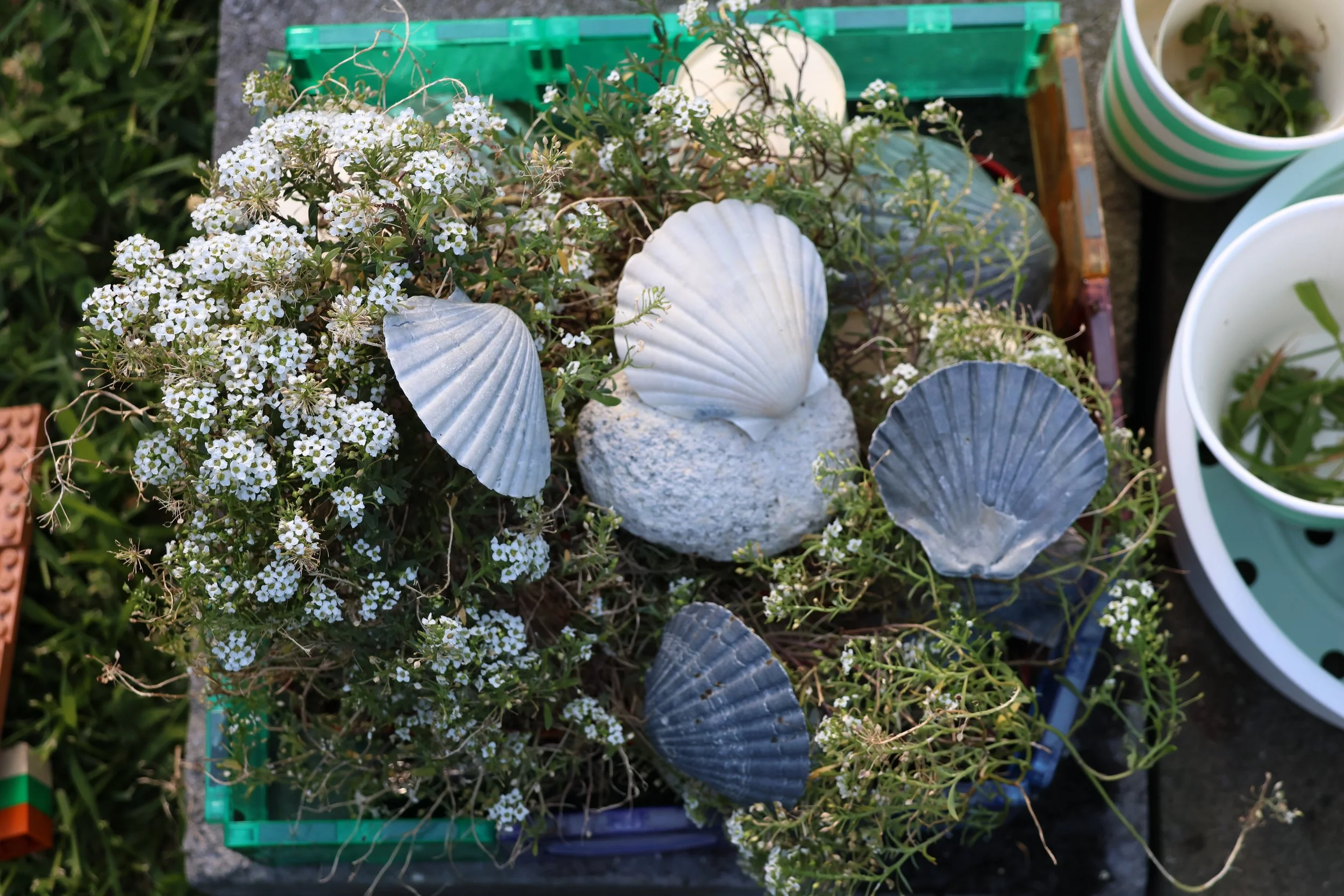
Plans are often driven by the learning outcomes or goals but these are lenses for kaiako, not targets for tamariki. Alison Clark’s Mosaic Approach reminds us that listening is an intentional pedagogical act. By positioning tamariki as “experts in their own lives,” Clark shifts the adult role from deliverer of predetermined outcomes to co-researcher alongside tamariki. Listening pedagogy asks us to gather the perspectives of tamariki through multiple methods - conversation, observation, documentation, shared reflection, and to allow these insights to shape curriculum decisions. In this way, intentional teaching is not about steering learning toward a fixed endpoint. It is about responding thoughtfully to the ideas children bring, trusting that curriculum emerges in relationship rather than from a template.
We notice. We interpret. We respond. We revisit.
The cycle of observation, interpretation, implications, implementation and evaluation reflects a responsive, relational process. It unfolds alongside children’s thinking rather than ahead of it.
Te Whāriki reminds us that the Learning Outcomes are a compass, not a roadmap. They help us interpret what we are seeing; they orient us toward valued learning. They are not milestones to be delivered or checkpoints to be achieved, they are not a destination to arrive at.
The Professional Marveller
A professional marveller stays curious, resists rushing to correct, listens for the theory beneath the action, and values the question more than the answer.
This is not passive admiration. It is disciplined, intellectual wonder. It is rigorous work - observing, documenting, reflecting, and returning to the ideas of tamariki over time. Ann Pelo and Margie Carter remind us:
“When we grab hold of children’s play to wrestle it into a ‘teachable moment,’ we dishonour their sovereignty as thinkers.” (Teaching to Thinking: A Pedagogy for Reimagining Our Work) When we rush to impose our meaning, we silence theirs.
Pedagogical documentation has been described as a philosophical way of working, beyond a “product”, beyond a weekly, monthly, termly plan. (Semman, Fleet & Christie)
Intentional teaching becomes evident not through the volume of plans produced, but through the depth of interpretation and responsiveness that follows listening to tamariki.
The Licensing Criteria has always expected kaiako to have understanding of current research and theory. We wonder whether part of the challenge of what we are seeing in many settings in terms of a huge focus on intentional teaching lies in how accountability has become increasingly paper-driven, sometimes interrupting the flow of learning through play.It is just a hunch, but think for a moment…..
In some spaces, professional growth cycles can drift toward a focus on skills rather than pedagogy or kaiako are asked to focus on a perceived weakness rather than something they are passionate about.
When PGC becomes a box-ticking exercise, or simply evidence gathering for appraisal, intentional teaching can quietly shrink into the question, “What do I need to show?” The focus shifts from deepening practice to producing proof.
Yet when professional growth is grounded in genuine pedagogical inquiry, when kaiako engage in deep reflection on noticing and responding, examine their own kaiako scripts, analyse impact over time, and strengthen their professional judgement, intentionality becomes visible naturally. It no longer needs to be manufactured through predetermined goals or individual plans. Instead, it is evident in the language used with tamariki, in the protection of uninterrupted play, in the thoughtful design of environments, and in the discernment shown in knowing when to intervene and when to step back. In this way, professional growth is not separate from intentional teaching; it is the very condition that allows it to flourish.
Embracing Uncertainty
To sidestep checklists and IDPs does not mean abandoning responsibility. It means shifting our lens. Instead of asking, “Have they achieved this milestone or learning goal?”
We might ask, “What theory are they building?”
Instead of asking, “How do I teach this skill?”
We might ask, “What conditions invite this learning to emerge?”
Professional judgement is not the absence of rigour. It is rigour lived in relationship.
Accountability need not reduce pedagogy to paperwork. It can instead be found in the transparency of thinking, the clarity of reflection, and the courage to articulate why we chose to act - or not act in a particular moment.
Perhaps intentional teaching in early childhood education is best understood not as something we prove in advance, but as something we live alongside tamariki each day.
Every moment holds the potential to be intentional.
Long plans that focus on proving practice may say little about the depth of pedagogy taking place. Wise teaching is not proven in advance; it is revealed in relationship. Intentional teaching lives in the professional judgement of kaiako who are willing to marvel - to pause, to question, to protect thinking, and to extend possibility without narrowing it.
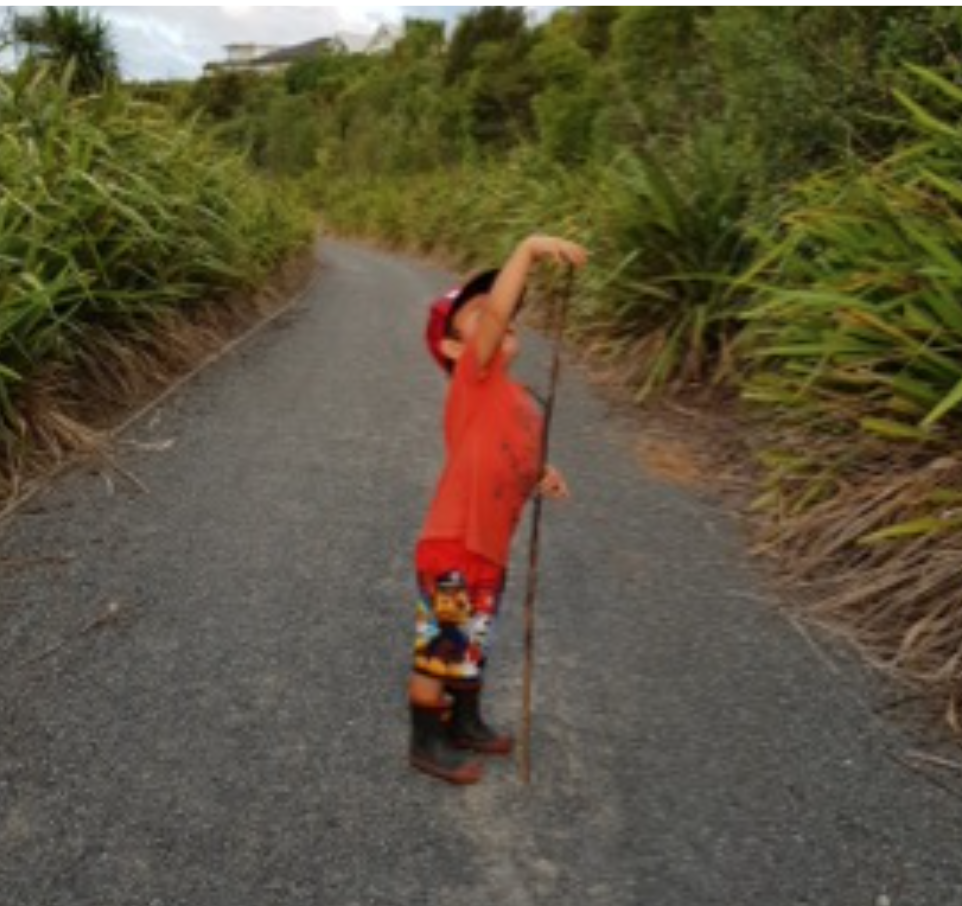
When we reclaim intentionality as relational, reflective and responsive, we strengthen not only our practice but the very identity of tamariki as capable, competent learners. The professional marveller does not rush ahead of the tamariki; they walk alongside.
To be an intentional marveller is to believe that the uniqueness of each tamaiti is worthy of our attention. Ko te ahurei o te tamaiti arahia o tatou mahi. Let the uniqueness of the child guide our work.
References:
Clark, A., & Moss, P. (2011/2017). Listening to young children: The mosaic approach (2nd/3rd ed.). National Children’s Bureau.
Carr, M. (2001). Assessment in early childhood settings: Learning stories. Paul Chapman Publishing.
Carr, M., & Lee, W. (2019). Learning stories in practice. Sage.
Gray, P. (2013). Free to learn: Why unleashing the instinct to play will make our children happier, more self-reliant, and better students for life. Basic Books.
Ministry of Education. (2017). Te Whāriki: He whāriki mātauranga mō ngā mokopuna o Aotearoa: Early childhood curriculum. Author. Ministry of Education. (n.d.).
Ministry of Education. (2008, revised). Licensing criteria for early childhood education and care services 2008. Author.
Pelo, A., & Carter, M. (2014). Teaching to thinking: A pedagogy for reimagining our work. Redleaf Press.
Rinaldi, C. (2006). In dialogue with Reggio Emilia: Listening, researching and learning. Routledge.
Semann, A., Fleet, A., & Christie, B. (2025). Redefining Assessment and Planning:Seeing children through pedagogical documentation
Pademelon Press
Shumaker, H. (2016). It’s OK not to share: And other renegade rules for raising competent and compassionate kids. TarcherPerigee.
Wien, C. A. (2008). Emergent curriculum in the primary classroom: Interpreting the Reggio Emilia approach in schools. Teachers College Press.