
More Than a Mud Kitchen: What Outdoor Kitchens Make Possible
Think about the last time you stood in a kitchen with other people. Where did you gather? Where did the conversations happen? Chances are, it wasn’t tucked away against a wall.
Have you ever thought about the changing view of the way kitchens are set up in our homes? Years ago, benches sat around the outside of the room, leaving the central space blank. There has been a big shift away from that model toward island benches.
I don’t know exactly how or why that shift began, but what it has changed is significant. The kitchen is no longer an isolated space where one person works alone. It has become a communal space. The island represents a place where we share conversation, share mahi, and where cooking and eating are about community.
So what does this have to do with early childhood? Actually - a lot.
When we think about our environments, it’s not just about the resources. The environment includes the physical space, the resources, how we use time, and kaiako presence. And even when we narrow our focus to resources, it’s not just what we have - it’s where and how those resources are placed.
Designers of natural play environments remind us that spaces are never neutral. The way environments are shaped - open or closed, flexible or fixed - directly influences how mokopuna connect, collaborate, and imagine together. Environments should invite mokopuna into shared experiences rather than directing them into isolated or prescribed ways of playing.
In many ECE settings, outdoor kitchens, mud kitchens, or sandpit kitchens are positioned against a fence, or have a wall, giving the sense of being placed against an internal wall. What if we shifted that thinking? What if outdoor kitchens were more open and communal - spaces where mokopuna could work from both sides of a bench? That simple change invites collaboration, imaginative conversation, and deeper engagement in dramatic play. It becomes far more social, and far more aligned with what we see in our own homes.
Natural play research echoes this thinking, highlighting that open, accessible environments encourage cooperative play, shared problem-solving, and sustained social interaction. When the mokopuna can approach a space from multiple sides - physically and imaginatively - the play becomes richer, more relational, and more inclusive.
So take a moment to think about your spaces, particularly your outdoor kitchens. How do they invite community? How do they acknowledge that kai, and the preparation of kai, isn’t just one person’s mahi, but something that can be collective? And how does your space invite more tamariki to participate?
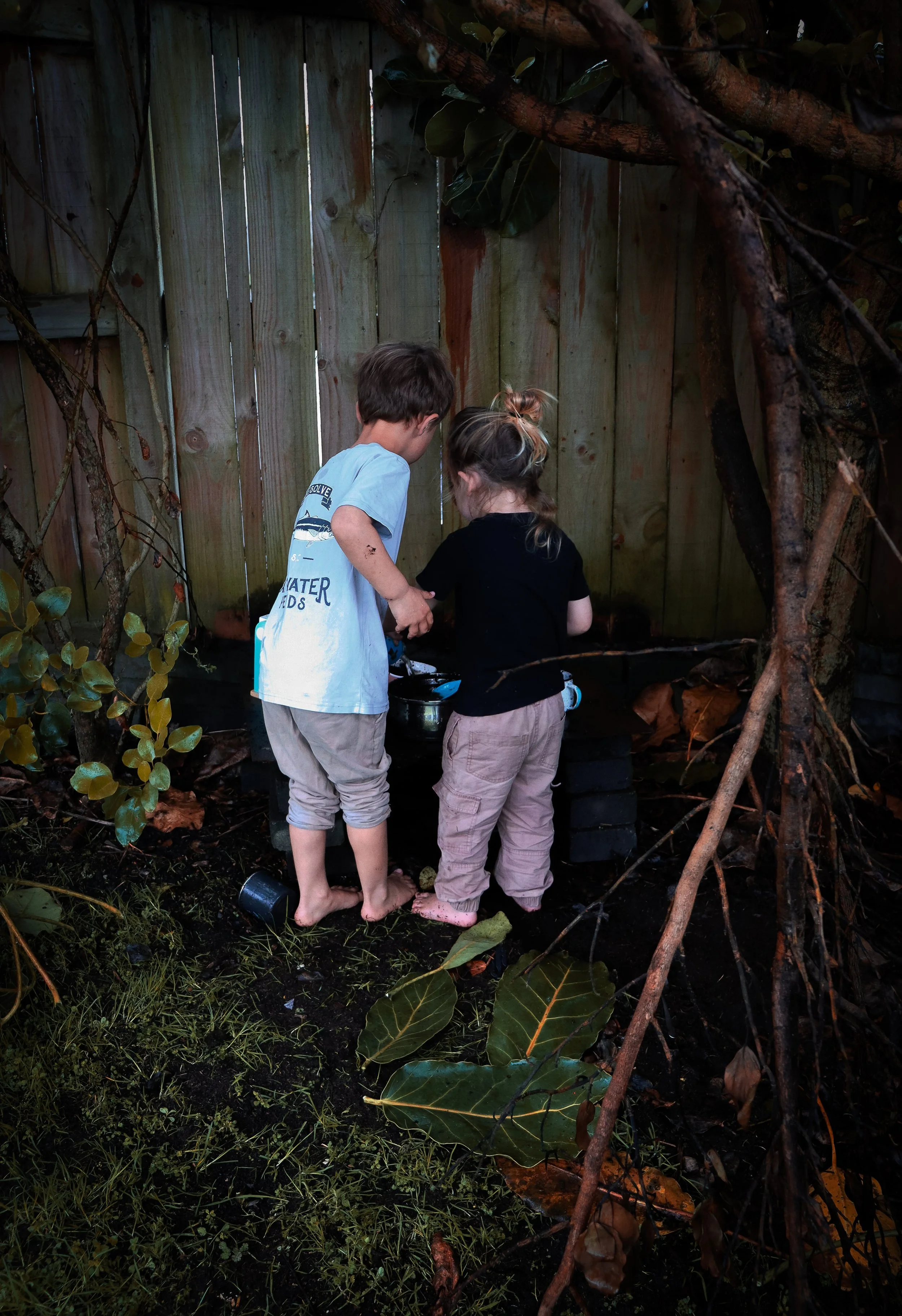
I’ve watched my moko, who absolutely love the outdoor kitchen. Our outdoor kitchen at home followed a more traditional ECE approach and sat against the fence. There was more than a subtle change in the play when the space was transformed into something more communal. What shifted the play was moving a wooden platform to create an island bench. That change allowed for much more working alongside one another.
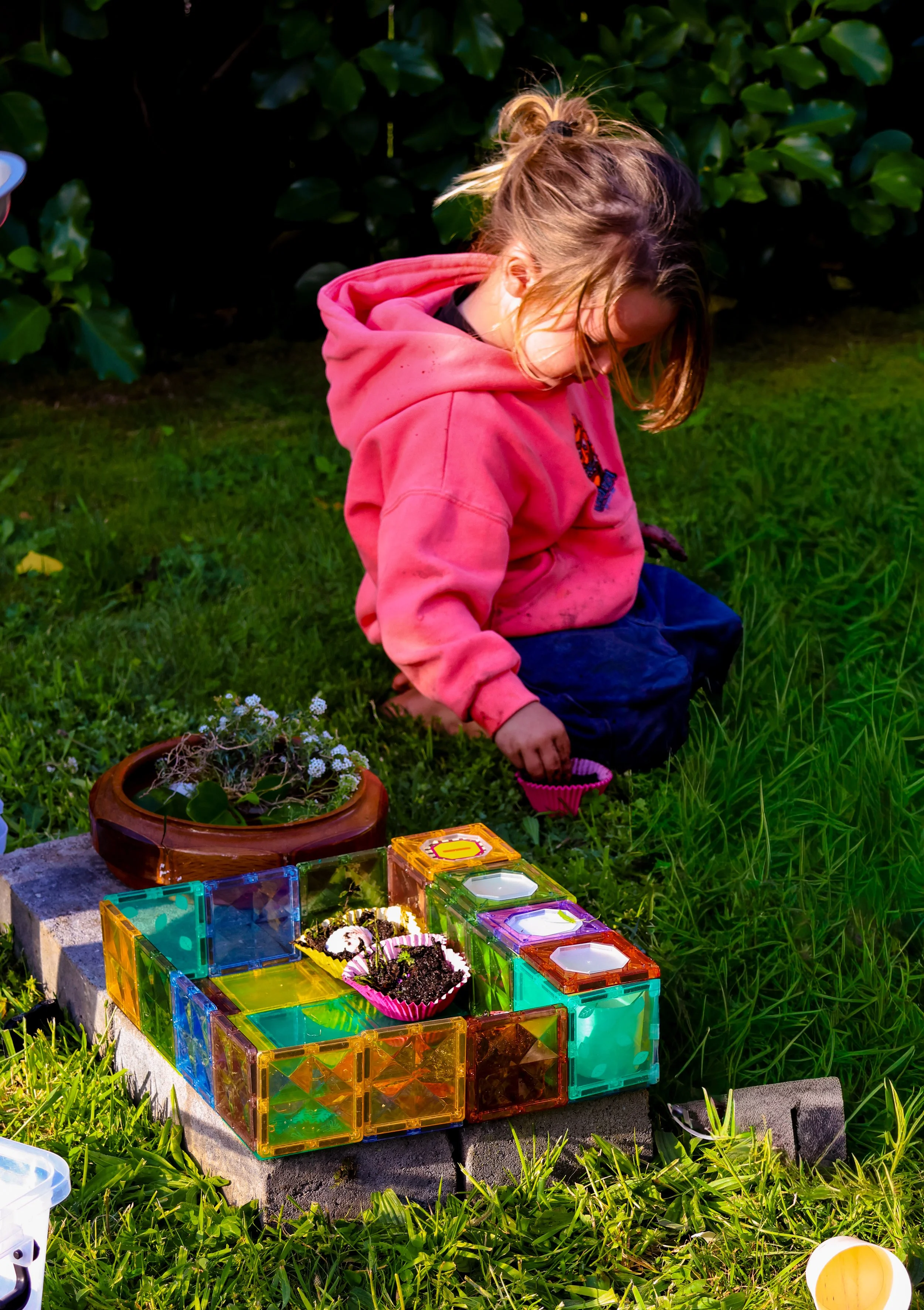
The play shifted. It was still a cooking space, but it also became a shop. Ollie, Archie, Paisley, and myself could move from one side to the other, collaborating rather than working in parallel. Another shift came from allowing loose parts to move freely. Traditional indoor provocations were taken outside, and suddenly magnetic tiles became holders for ice cream toppings.
If resources are being used for a purpose, can they not shift and move with play? This is about creating a yes environment - pausing to consider why we might say no. Are we interrupting what we value, which is play, because of a preconceived rule we’ve put in place without revisiting its purpose? Rules about keeping things segmented: inside and outside, dramatic play and art, and the resourcing that belongs in each space.
Advocates for nature-based play describe loose parts as powerful tools for agency - materials that can be reimagined, repurposed, and redefined by mokopuna rather than confined to predetermined uses. When resources are allowed to move with the play, mokopuna are no longer just users of the environment; they become co-creators of it.
How do you create a yes environment in your space?
Have you ever considered how the environment talks? What is your environment saying to tamariki? And where does agency sit within that?
Is your environment saying this place is for the mokopuna - or is it saying this is about aesthetics, what’s visually appealing to us as kaiako, or what’s easiest to tidy up at the end of the day? We often talk about mokopuna having autonomy and agency, and I know they do to a huge extent. But how much agency do they really have over environmental decisions?
We are the ones who put the provocations out. We often dictate how time is used. We decide which resources are available and where they are placed at the beginning of the day. We purchase the resources, and we do this because it is our role as kaiako to provide rich, intentional environments.
But where is the voice of the mokopuna in that decision-making?
Those working in natural playground design often begin not with adding new elements, but by observing how children already use the space. What children return to, abandon, move, or transform becomes data - their voice made visible through action. A wise kaiako/leader once told me about their environmental review, and she said that before they did anything, they observed how the tamariki used the space first. So how are your tamariki using the space? That’s their voice.
If they are moving resources, that’s their voice. If they want to move resources from inside to outside, that’s their voice. If they are seeking collaboration, that’s their voice. And if you notice dramatic play diminishing in the outdoor kitchen, that’s their voice too. Kitchens should be buzzing with creativity and conversations.
Think about any kitchen. It’s where food is prepared, often where it’s eaten, and where it’s cleaned up - but all of that happens in community. So think about your outdoor kitchens. I love outdoor kitchens. I love the conversations, the imagination, the creativity, and often the kindness that flows so naturally in these spaces. And I wonder how you might add another layer, intentionally thinking about how your space builds community.We have had some incredibly high winds recently, so during this time I took the gazebo that framed the outdoor kitchen space down. Guess what happened - nothing. The play stopped. The space was no longer drawing Ollie and Archie in; it became abandoned. Environments talk. We need to think closely about what they say. The actions and reactions of the mokopuna are often their voice - a previously buzzing space now empty, even though the resources are still there. It is never just about the resources; it is also about how they are thoughtfully curated.
So perhaps the real question isn’t what resources we add next, but how well we are listening to what the mokopuna are already telling us. Writers from the Bienenstock Playgrounds blog describe outdoor environments as places that should “grow with children,” responding to their needs for connection, creativity, and belonging rather than remaining static displays. When environments are designed - or re-designed, through listening, they naturally become places of community rather than consumption.