
From Process to Purpose: Rethinking Improvement in ECE
Changing the Culture in Early Childhood Education
There is a shift happening in early childhood education right now.
Centres are navigating change. Expectations are evolving. Alongside this has come a wide wave of support being offered - programmes, packages, systems, solutions.
But with that has also come something else…
Uncertainty.
Pressure.
And for many, a quiet concern about getting it right.
We’re hearing it in conversations: “Are we doing enough?” “Are we meeting expectations?” “What if we miss something?”
How we approach compliance during times of change matters.
I sometimes wonder if too much information can make the task at hand feel bigger than it is. This can lead to a sense of being overwhelmed, under-resourced, and uncertain. Leaders’ minds can become full of the chatter from online conversations and webinars - all of which come at some sort of cost, either financial or emotional.
We have been mindful about entering that space - another voice, another view - while at the same time continuing to work alongside leaders and kaiako through SELO contracts and our Professional Learning Networks.
We want to offer support to our ECE community - not as a paid webinar, a wānanga, or a package - but as a resource that you can draw on in your own time, and in your own way.
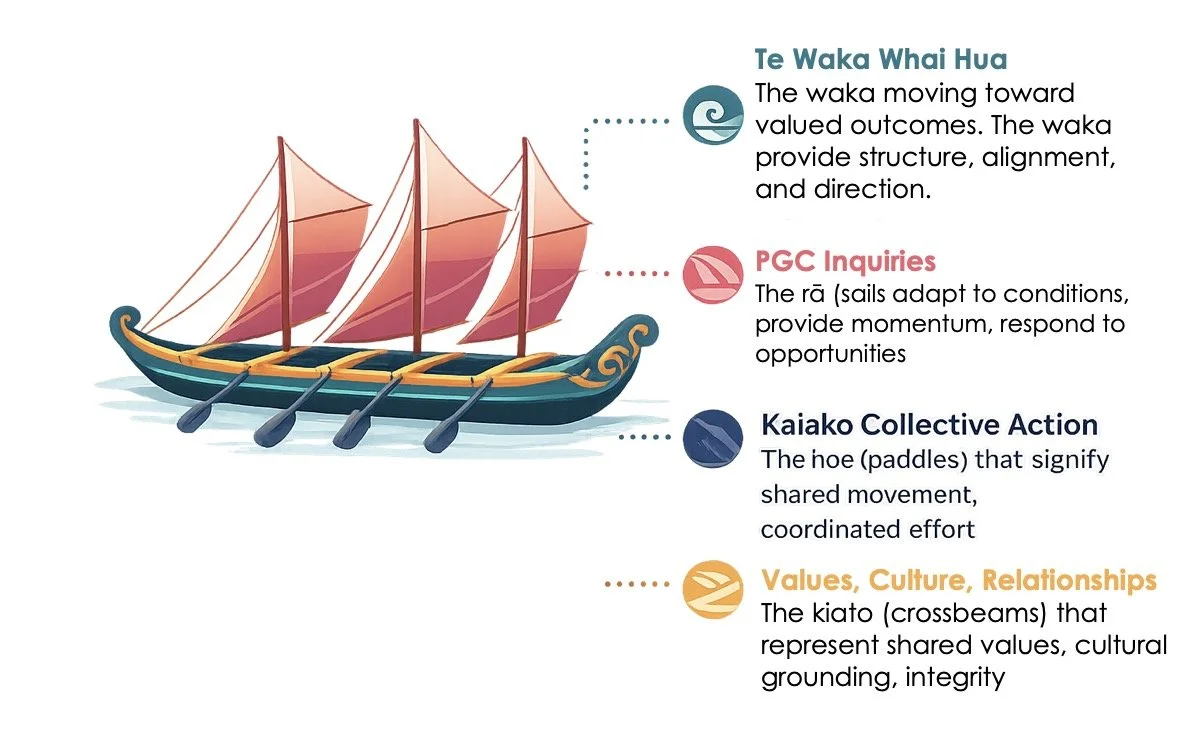
At Educating Hearts and Minds, we acknowledge that compliance matters. It is part of our responsibility to mokopuna, whānau, and our profession. It creates a necessary foundation for teaching and learning.
But how we approach change also matters - slowly, thoughtfully, and responsively, rather than reactively.
During this time of change, we want to offer an approach that can replace processes that have, at times, felt cumbersome within internal evaluation, by bringing the focus back to:
– intentional inquiry
– shared reflection
– meaningful change over time
Because improvement is not about adding more.
It is about doing what matters most - better.
Right now, there is an opportunity to pause and ask:
What really matters for our setting? How can we as a setting authentically engage with what might be termed internal evaluation but equally could be called a quality improvement focus. This alignment is what we want to share.
We want to support settings to think beyond:
“This is the way we’ve always done it”
And instead consider:
- What is making the biggest difference for our mokopuna?
- How are we growing our kaiako capability together?
- What does quality look like in our context?
Because meaningful improvement doesn’t come from systems alone. It has never been about ticking a box for us, but for creating processes that are authentic and grounded in making meaning to the learning lives of the mokopuna.
It comes from kaiako learning, inquiring, and reflecting together -
a shared journey, not a checklist.
That’s why we’ve made the decision to share our handbook openly.
No cost. No gatekeeping. No conditions.
Just a resource grounded in:
- Te Whāriki
- Te Tiriti o Waitangi
- Professional growth through inquiry
- Strengthening practice across the whole setting
Because when knowledge is shared, not held…
When we walk alongside rather than ahead…
When we support kaiako and leaders to feel confident in both their practice and their responsibilities…
That’s when culture begins to shift.
A shift back into a community of ECE.
Back to reciprocity.
Back to the intent to see all settings thrive - not at a cost, but as a shared responsibility.
We are here for that shift. And we’re committed to walking it together.
Perhaps this is the invitation - to come together, to share openly, and to lead alongside one another.
Nāu te rourou, nāku te rourou, ka ora ai te iwi.
Because when we each bring what we have, and place it alongside others, our communities are stronger for it.