
Interrupting Presence
What if the greatest interruption to play is not the timetable, but our need to constantly document it?
What is becoming increasingly clear to me is that the conversation about uninterrupted play is not only about protecting the play of tamariki from interruption - it is also about protecting our own ability as kaiako to be fully present within it.
The research tells us that tamariki need around 45 minutes to become deeply engaged in play. Forty-five minutes to move beyond the surface. Forty-five minutes to settle into ideas, test theories, negotiate relationships, use imagination, solve problems, and become immersed in the complexity of play. But actually, they need more than 45 minutes. As Heather Shumaker writes:
“Preschool kids need at least 45 minutes to get into really good play. And once deep play has started, kids need more time, well beyond that 45 minutes, to expand and develop that play.” (Shumaker, 2013)
Janet Lansbury reminds us: “When we allow children uninterrupted time to play, we are giving them the message that their choices, ideas, and focus matter.” (Lansbury, 2009)
This connects strongly to Te Whāriki and the concept of whakamana - empowering tamariki to lead their own learning journeys. When we continually interrupt play, redirect it, or insert ourselves too quickly, what message are we giving about the ideas, capabilities, and autonomy of tamariki? (Ministry of Education, 2017)
When we think about interruptions within early childhood settings, our minds often go immediately to the obvious ones - mat times, transitions, kai times, tidy-up times, orcare routines. But perhaps uninterrupted play is far more complex than that.
Recently, I was in conversation with a leader whose centre was engaging in internal evaluation around uninterrupted play. During the conversation, we reflected on the number of times cameras, phones, or iPads were placed in front of tamariki throughout the day. And it made me wonder whether one of the greatest interruptions to play today is not always the timetable, but the pressure to constantly document learning as it unfolds.

An activity is thoughtfully set up and before the play has had time to evolve, the camera appears. Photos are taken. Documentation begins. Learning is captured before tamariki have had time to become fully immersed in the experience itself.
I wonder whether sometimes we have slipped into what I call “proving practice.”
Not reflective practice.
Not responsive practice.
Proving practice.
Practice driven by the need to show learning, document teaching, and make pedagogy visible.
Perhaps this pressure comes from increasing expectations around intentional teaching. Perhaps it is shaped by social media and the idea that learning should always be visible, immediate, and shareable. Or perhaps it reflects a deeper discomfort with trusting play itself.
Because if we truly trusted play, would we feel such urgency to constantly capture it?
Would we feel the need to interrupt concentration in order to prove learning was happening?
Would we rush to set up carefully curated activities designed to produce visible outcomes?
Would we feel pressure to constantly scaffold, question, extend, document, and perform our teaching?
Or would we trust that deep learning is already unfolding within play itself?
Sometimes I wonder whether performative teaching has unintentionally pulled kaiako away from presence and into production. When the focus becomes documenting learning, proving intentional teaching, or creating visible evidence for parents, managers, ERO, or IDP requirements, it can become difficult to simply be alongside tamariki without feeling the need to produce something tangible from the moment.
Perhaps that pressure also shapes the kinds of experiences we offer the tamariki.
When we stop trusting play, there can be. a tendency to fill the environment with adult-designed activities that look meaningful, photograph well, and appear visibly educational - but often only invite surface-level engagement. Activities that tamariki move through quickly rather than deeply immerse themselves within.
Yet deep play is rarely neat, immediate, or visually impressive.
Deep play often looks repetitive.
Slow.
Messy.
Unfinished.
Quiet.
Chaotic.
Ordinary.
It is the tamariki returning to the same ideas over and over again. Negotiating roles within imaginary play. Transporting water for long periods of time. Building and rebuilding structures. Watching before entering play. Testing theories. Solving problems. Becoming completely absorbed in the process itself.
This kind of play cannot flourish when tamariki are continually interrupted - not only by routines and transitions, but by adult agendas, documentation demands, questions, cameras, and the pressure to make learning visible.

Phones, cameras, and iPads are valuable tools. Documentation absolutely has
an important place within early childhood education. Carlina Rinaldi reminds us that documentation is not simply about collecting evidence or proving learning has occurred. Documentation is about listening. About interpretation. (Rinaldi, 2006)
About deepening understanding rather than interrupting the learning experience itself.
But I cannot help wondering whether tamariki are becoming the most photographed generation of all time.
And perhaps the deeper question is not simply whether cameras interrupt the play of tamariki, but whether they interrupt our ability to truly be present with tamariki.
Because when kaiako are focused on taking photos, framing moments, capturing evidence, or thinking ahead to
learning assessment and displays, part of us is already outside the interaction itself. Our attention shifts toward the “what next” rather than remaining grounded in the unfolding moment.
Tamariki know when kaiako are truly with them. They notice when our attention is divided. They feel the difference between being deeply listened to and being observed through a lens. I find myself wondering: what would happen if we took the cameras away for a while?
What if we stopped trying to capture every moment?
What if we trusted that not all learning needs proof?
What if we allowed ourselves to simply sit beside tamariki without documenting, narrating, evaluating, or redirecting?
What if intentional teaching sometimes looked like restraint?
Perhaps intentionality can also mean intentionally protecting uninterrupted play.
Intentionally waiting.
Intentionally observing.
Intentionally listening.
Intentionally resisting the urge to interrupt.
Intentionally trusting the capabilities of tamariki.
Because if we truly trust play, then perhaps we do not need to constantly interfere with it.
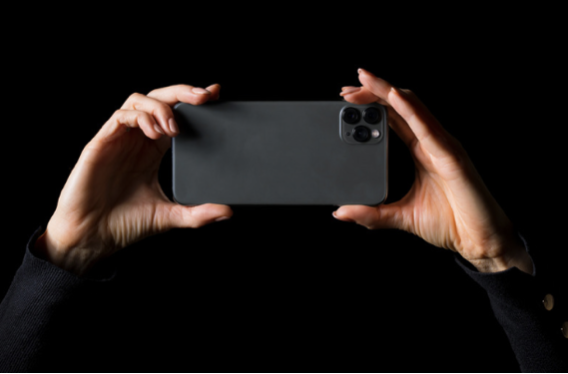
Perhaps we can allow tamariki long stretches of calm, uninterrupted time.
Perhaps we can stop searching for learning and start recognising that it is already there.
Perhaps we can move away from performative practice and back toward relational presence.
The conversation about uninterrupted play reminds me of Mihaly Csikszentmihalyi’s concept of flow and Sir Ken Robinson’s writing about being “in your element.” Both describe moments when we become so deeply immersed in what we are doing that time seems to disappear. Concentration deepens. Thinking becomes more complex. There is joy, creativity, and total engagement in the experience itself. (Csikszentmahlyi, 1990) (Robinson, 2009)
When adults experience flow, we protect it fiercely. We do not want constant interruptions while we are writing, creating, reading, or problem-solving.
Tamariki deserve that same respect for their concentration.
Flow requires time.
Trust.
Presence.
Freedom from unnecessary interruption.
Perhaps uninterrupted play is really about more than protecting the rights of tamariki to play. Perhaps it is also about protecting relationships. Protecting the possibility of genuine presence between kaiako and tamariki.
Perhaps tamariki do not need us to constantly prove their learning - they need us to protect the space for it to unfold.