
What if it starts with us
A few days ago, Michelle and I attended a conference and listened to two very different speakers.
The first speaker was from the Kindness Institute, and so much of her kōrero resonated with me. She spoke about mana-enhancing practice. About being present. About slowing down. About genuinely seeing the person in front of us. About connection. I found myself nodding along, taking notes and thinking this is great.
Yes. This. This is what matters.
The second speaker, well that experience was quite different. He works alongside people to help them understand and respond to rangatahi who become triggered and dysregulated. He talked about young people whose responses can be activated by something as seemingly simple as a smell, a sound or a word. He talked about recognising escalation and knowing how to respond and de-escalate situations.
And he shared his own story.
He spoke about experiences in his childhood, the trauma he carried, and the pathway his life eventually took into crime and prison.
As I listened, I could feel myself closing off a little, trying really hard not to cross my arms and close my mind.
There were pieces of his kōrero I could take away, but if I am truthful, I left thinking that there wasn't a lot in his message for me.
What stayed with me instead was sadness. A heaviness about the complexity of being a kaiako in secondary schools. A heaviness that this is where some of our rangatahi are.
That schools are needing to learn how to respond to teenagers carrying emotions so enormous that a smell, a sound or a word can take them straight back to somewhere their body remembers, even when they may not have the words to explain it.
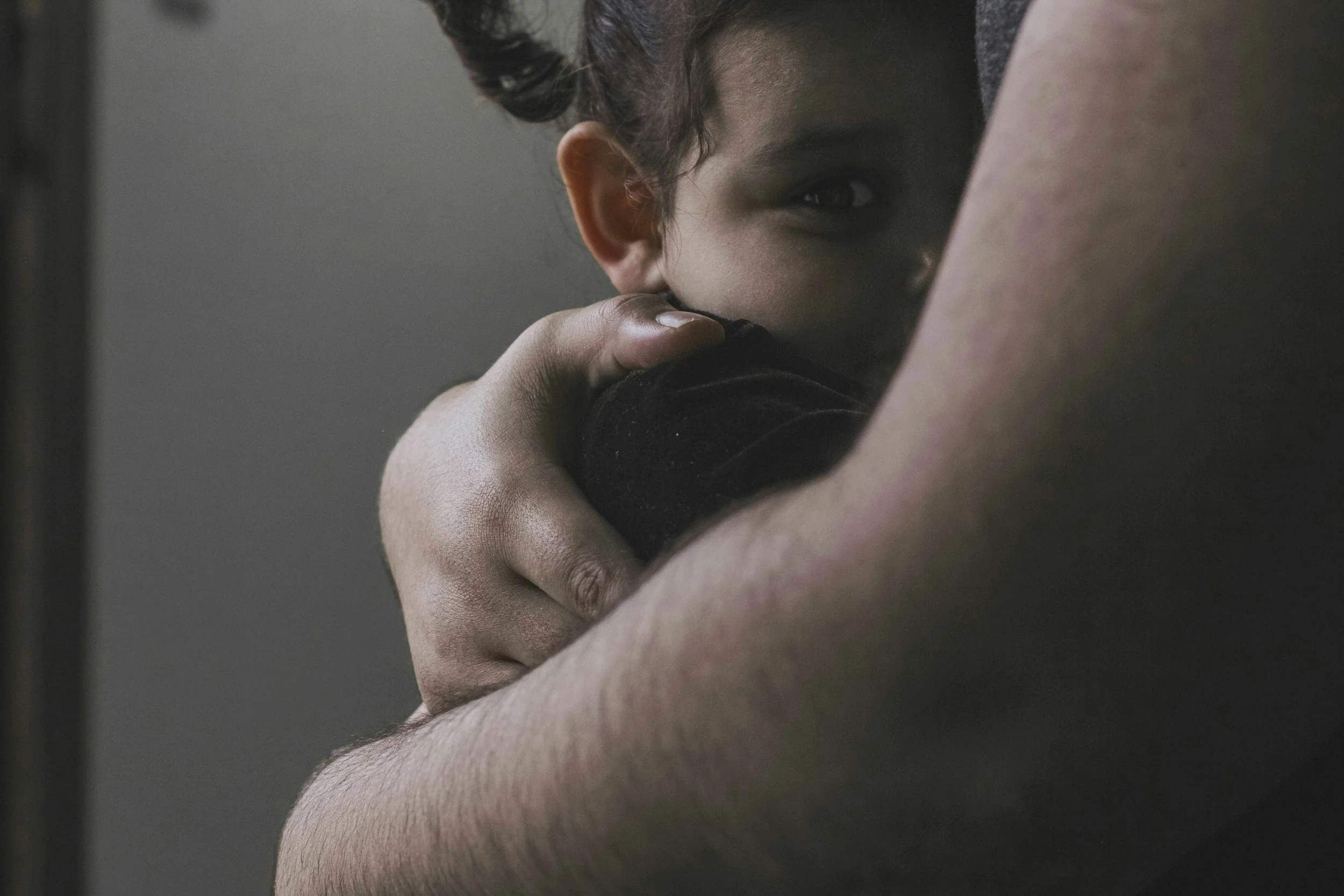
I’ve pondered on the two speakers over the last couple of days, sifting through my thoughts, biases and view of the world.
Now I think perhaps there was something very important in his kōrero for me after all.
Now I find myself pondering: what if some of the solution starts with us?
What if one of the most important things we can do for the rangatahi of the future is to teach our youngest tamariki that their emotions are not something to fear, hide or be ashamed of? I
am thinking particularly about the messages we have historically given boys. Not because big emotions, trauma or vulnerability belong to one gender - they don't - but because, for generations, ideas about masculinity have told boys and tāne that strength means being tough, holding it together and not showing vulnerability.
I wonder what happens when those messages begin in childhood.
How often have boys heard:
Toughen up.
You're all right.
Don't cry.
B
e a big boy.
They might sound like harmless words. Sometimes they're even said with affection.
But what are we actually teaching?
What happens when a tamaiti is hurting and the message he receives is, Don't show it?
What happens when he is frightened and learns that fear is weakness?
What happens when he cries and learns that tears are something to be embarrassed about?
Where does all of that emotion go?
It doesn't simply disappear.
For some people, hurt becomes anger. Fear becomes aggression. Powerlessness becomes a need for control. Pain that has never been given words can find other ways of being expressed.
Of course, childhood trauma does not mean someone will become violent, abusive or involved in crime. Most people who experience trauma do not go on to harm others. People of all genders can respond to trauma in many different ways. But we also know that people can learn very early which emotions they are "allowed" to show.
That makes me think about our responsibility as kaiako in early childhood. Perhaps changing some of the stories we see in adolescence doesn't begin when someone is 14 and escalating in a classroom. Perhaps some of that work begins when they are two. Or three. Or four.
When a tamaiti cries and instead of saying, You're all right, we say:
"I can see you're not all right. I'm here."
When anger overwhelms him, instead of demanding that he immediately stop, we help him understand what is happening inside his body.
When something frightens him, we don't tell him to be brave. We let him know that being frightened is part of being human.
When he has something to tell us, we slow down enough to listen.

I want to hear you.
I want to know what that felt like for you.
You don't have to hold this by yourself.
Maybe this is the intersection of the two workshops. Mana-enhancing practice.
Presence.
Slowness.
Kindness.
These just might be protective factors that support our future rangatahi.
When we slow down enough to notice the distress of a tamaiti, when we remain present with their big emotions rather than trying to shut them down, when we protect their mana even in the hardest moments, we are teaching something incredibly important:
Your feelings can be spoken.
Your feelings can be survived.
There are people who will listen.
You do not have to carry this alone. I sat in the second presentation thinking there wasn't much in the messages for me. .
A few days later, I think I was wrong.
Because while his mahi is about supporting rangatahi when those big emotions are already there, ours is about what happens much earlier.
We have an extraordinary opportunity in early childhood.
We can challenge the old story that strength means silence.
We can stop telling boys to toughen up.
We can teach all tamariki the language of emotion. We can show them that vulnerability and strength can sit alongside one another. We can create spaces where being upset doesn't diminish your mana and asking for help isn't weakness.
We won't prevent every hurt.
We won't change every future.
But perhaps, one small interaction at a time, we can help change the story.
And maybe one day there will be fewer rangatahi who have spent their childhood learning to hold everything in.
Because somebody, years earlier, looked at that tamaiti and said:
I
see you.
I hear you.
What you feel matters.